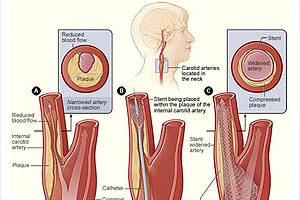
A specially designed wire with a filter is set beyond the site of the restricting or blockage in the carotid artery. When the channel is set up, a small balloon catheter is directed to the space of the blockage. At the point when the balloon is expanded, the fatty plaque or blockage is compacted against the artery walls and the breadth of the vein is broadened (enlarged) to build blood stream. The balloon is taken out and the stent is set inside the vein to augment the opening and backing the artery wall. After the stent is put, an angiogram is performed to affirm that the stent has totally extended and the restricting or blockage has been corrected. Frequently, a second balloon catheter is swelled to guarantee the stent is maximally opened. The stent remains in place permanently and acts as a scaffold to help the artery and keep it open. After few weeks, the artery recuperates around the stent.
You will be needed to lay flat after the sheath is eliminated. This is important to forestall bleeding. You might get prescription to minimize discomfort. Your primary care physician will decide how long you should lay flat, which could be from 2-6 hours.
Plan on to stay overnight in the hospital after the procedure. You will be assessed by your best heart specialist in Guntur, have a neurological test, and have different tests, like a carotid ultrasound, to assess the aftereffects of the method. Your doctor will talk about the consequences of the methodology with you and your family.
Your PCP will prescribe aspirin and Plavix (clopidogrel bisulfate) to take for one month after the procedure. These prescriptions assist with forestalling blood clots from shaping at the site where the stent was placed. Adhere to your PCP’s directions concerning how and when to take these meds. Try not to quit taking these drugs without first conversing with your PCP.